

Fuji has relentlessly iterated on their cheapest entry-level Instax mini camera since the 1990s. In 2023, the Instax Mini 12 felt like the ultimate culmination of these refinements, making for one of the best entry points into the entire hobby of analog film cameras. The Instax Mini 12 is affordable, easy-to-use, and shoots great pictures… so what is left to improve? Why make a new version at all?
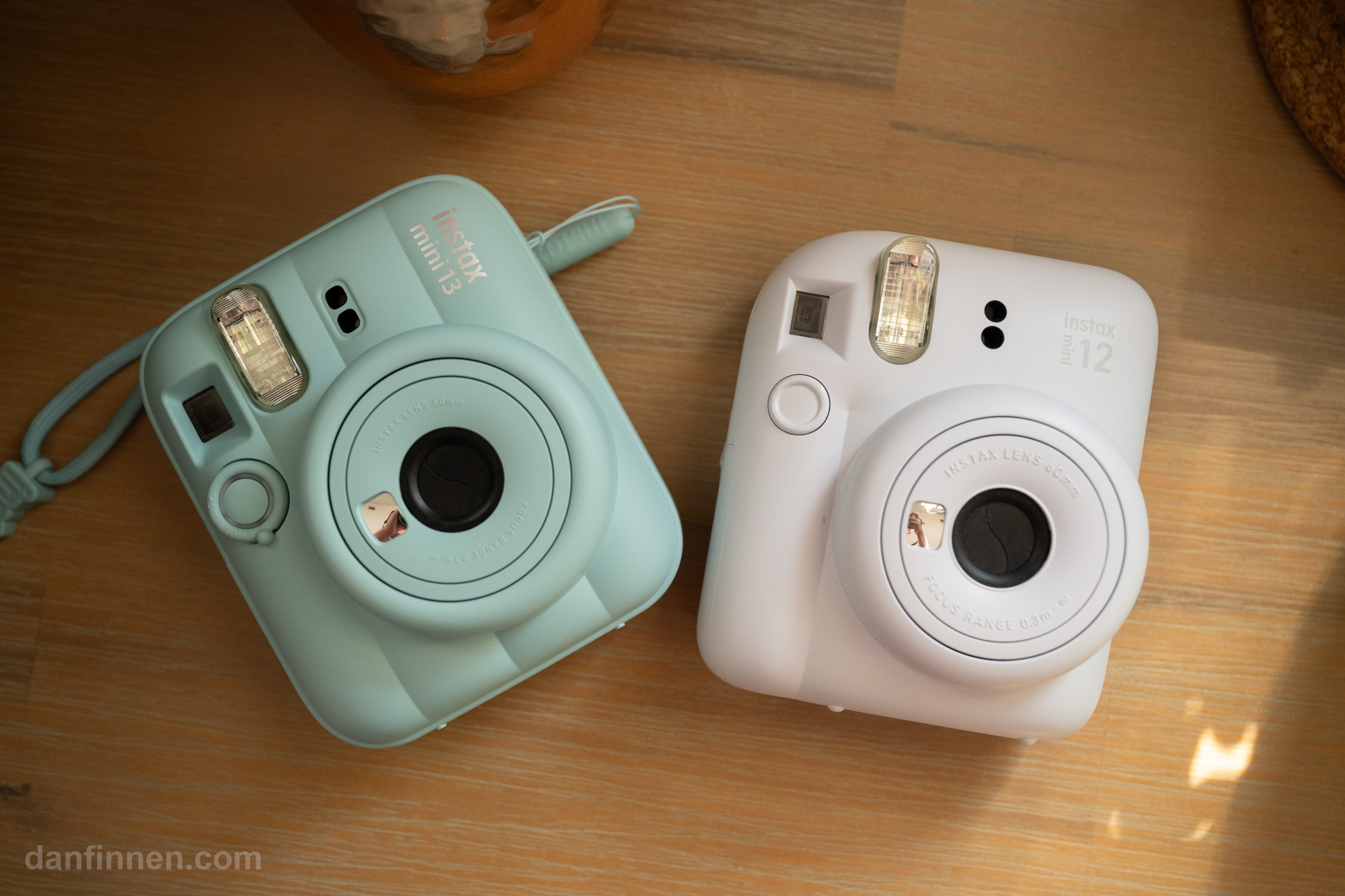
That’s the big question that the new Instax Mini 13 needs to answer in 2026.
Fuji’s answer seems to be ‘if it ain’t broke, don’t fix it.’ The only differences between the Instax Mini 12 and the 13 is the addition of a self timer and some cosmetic differences to the body. In nearly every other way, this is the exact same camera.
Which isn’t necessarily a bad thing. The Instax Mini 12 is an excellent camera, and this one is too. If you already have the 12 there’s no reason to upgrade, but if you’re new to the hobby, the Instax Mini 13 will become my default recommendation once the 12 is inevitably discontinued.
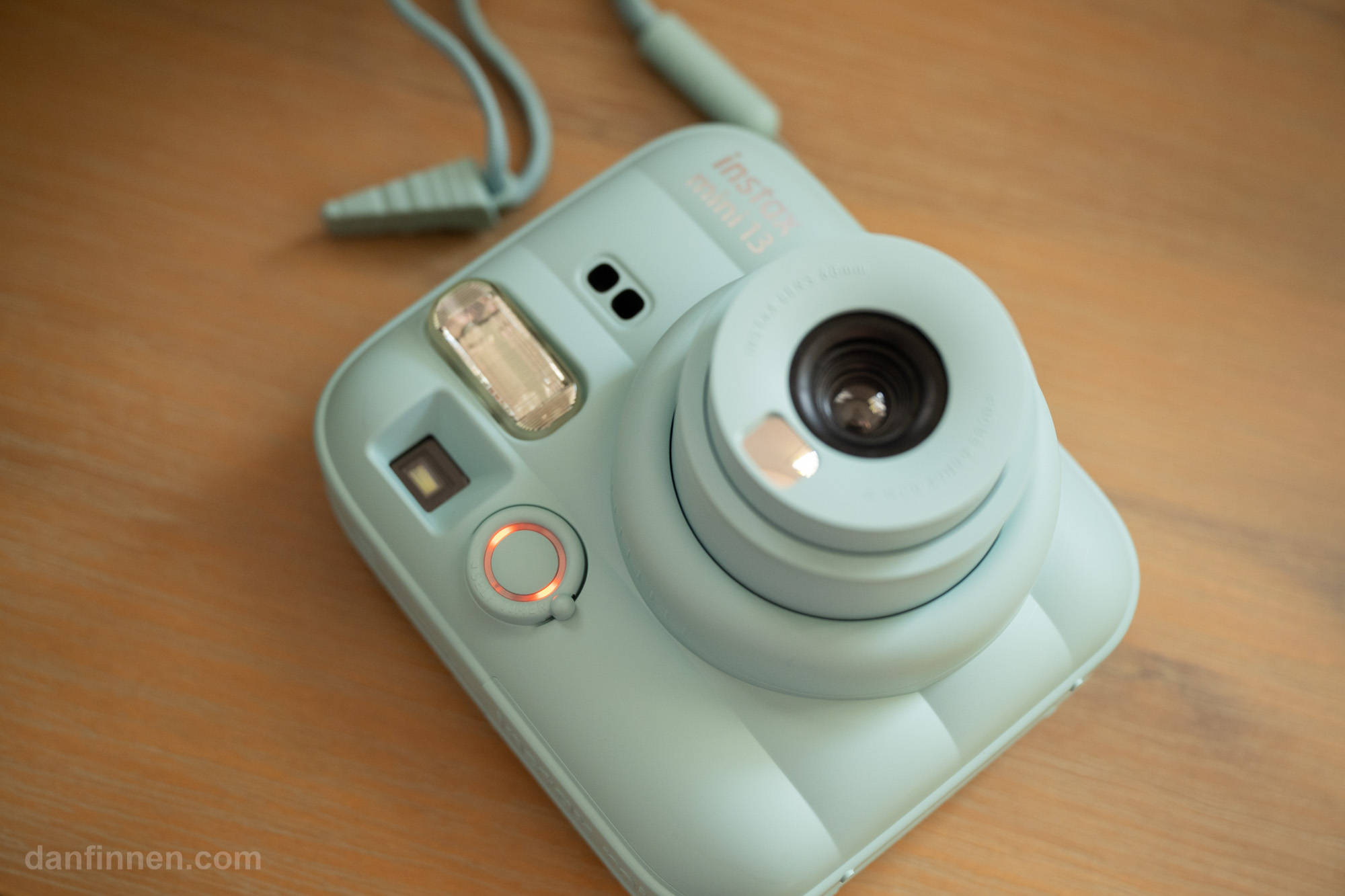
The timer function is the biggest new feature of this generation.
Features
The Instax Mini 13 is Fuji’s entry-level camera, so it has very little in the way of customizable controls. Turn the camera on, choose between close up or normal focus distance, and take your picture as the camera will handles the rest. Thankfully, it’ll probably do a decent job of it!
But you can’t switch the flash off, you can’t adjust exposure compensation, and you can’t add any effects. For that, Fuji would like you to step up to the more expensive and fully-featured Instax Mini 99 camera. The viewfinder is very basic, but like on the Mini 12, it will adjust the viewfinder between close up and normal focus modes to compensate for the change in framing which is cool.
The one new thing you can do on the Instax Mini 13 is trigger a timer for the shutter to help with self portraits. Flick the switch around the shutter button and you can choose between a 2 second and 10 second delay. There is a ring of LED lights that will count down to help give you an idea of when the camera is about to fire. It works fine even if it is a bit unintuitive to use without instructions. This selfie-focused feature joins one of many that the Instax Mini has accumulated over the years to make self-portraits easier, like a little mirror next to the lens that is very helpful for lining up your frame.
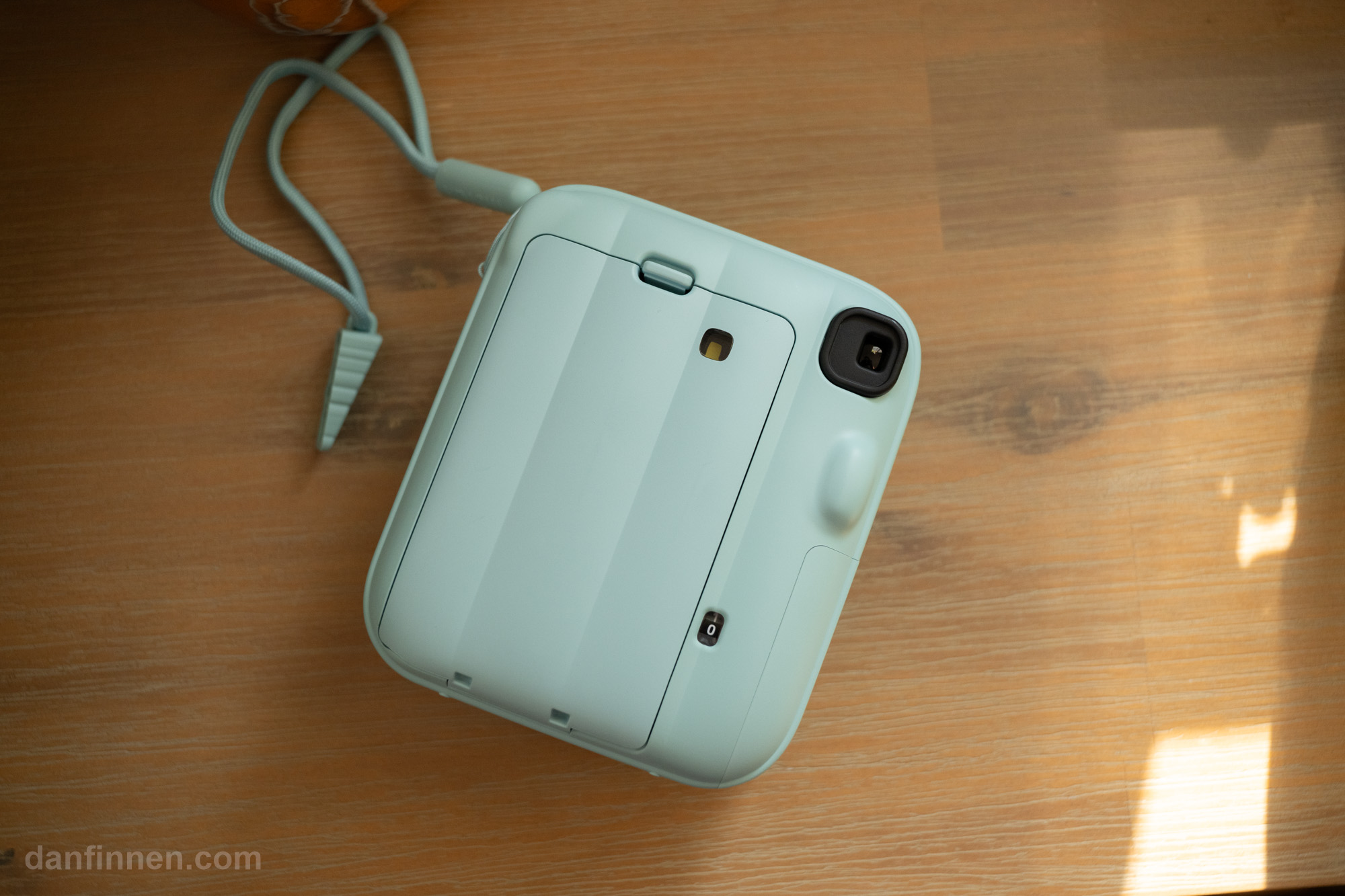
However, the addition of a shutter timer makes it utterly baffling that Fuji’s entry-level Instax camera still lacks a tripod screw hole. The main reason you would want a self-timer is to set up the camera farther than your arm can reach to take a photo on yourself using -wait for it- a tripod. Fuji seems to think you’ll use a flat surface like a table to do this, so it includes a little wedge of plastic in the box attached to the camera strap. You can use it like a little shim to angle the camera up at yourself for a slightly better angle. It’s clunky in practice and lower angles (like what a table provides) are generally more unflattering than higher angles (like what a tripod can do).
I just don’t understand why Fuji went through the effort of making this included shim and also give this camera a screw hole for a tripod mount? It’s an absolutely baffling omission, as Fuji has made many other Instax Mini cameras that have it. There’s plenty of room on this body for one. Don’t be surprised if you see clunky accessories pop up that use a clamp to mount this camera to a tripod.

Since you don’t have a tripod screw mount, you’re going to be doing a lot of this for selfies.
Build Quality
I will call the industrial design of this camera is ‘inflatable mattress’. No, really, this thing looks exactly like an inflatable pool floatie or a weird cushion. The design has grown on me a little as I use it, so I don’t hate it. Personally I like cameras to look like cameras (see the Instax 99 for this done really well), but over the years, Fuji has increasingly embraced cutesy designs that likely are meant to appeal to women. If you require something a bit more industrial or masculine, that seems to be the entire reason for the Instax Mini 41‘s existence.
I like the mint color I got my hands on, and the flatter edges make the Mini 13 a bit easier to put on a table or shelf without it falling over. The plastic scratches very easy, so don’t be surprised if this thing scuffs up quickly from a day in a bag or backpack. Otherwise, it should be able to take everyday use with ease.

Picture Quality
Fuji has done a great job dialing in exposure on their Instax Mini cameras on everything that’s come out since the Mini 12, and the Mini 13 continues to be excellent. The camera will generally error on the side of exposing brighter rather than darker, which I feel is the right call. The Mini 13 even manages to expose my black dog correctly, making her more than just a black void. This is something far more advanced cameras regularly struggle with.
The camera very much needs the flash to expose correctly, and don’t be surprised if anything outside of its range is very dark, especially indoors. Also, all the usual Instax quirks are here, like ultra bright spots (like the disc of the sun) turning black on the image.
Sharpness is great and there isn’t any obvious distortion that is going to affect your images. The biggest obstacle to image quality will be from missing focus if you judge your subject too close or far for the close up or normal focus modes. I would love for Fuji to include some rudimentary focus system to help guide you, but just know if you’re doing a headshot of a single person you’ll need to do close up mode, and anything farther than that will be ‘normal.’ Considering how small the frame is and that you’ll need to do headshots just to get your subject large enough to see, you’ll be in the close up mode quite a bit.
Power
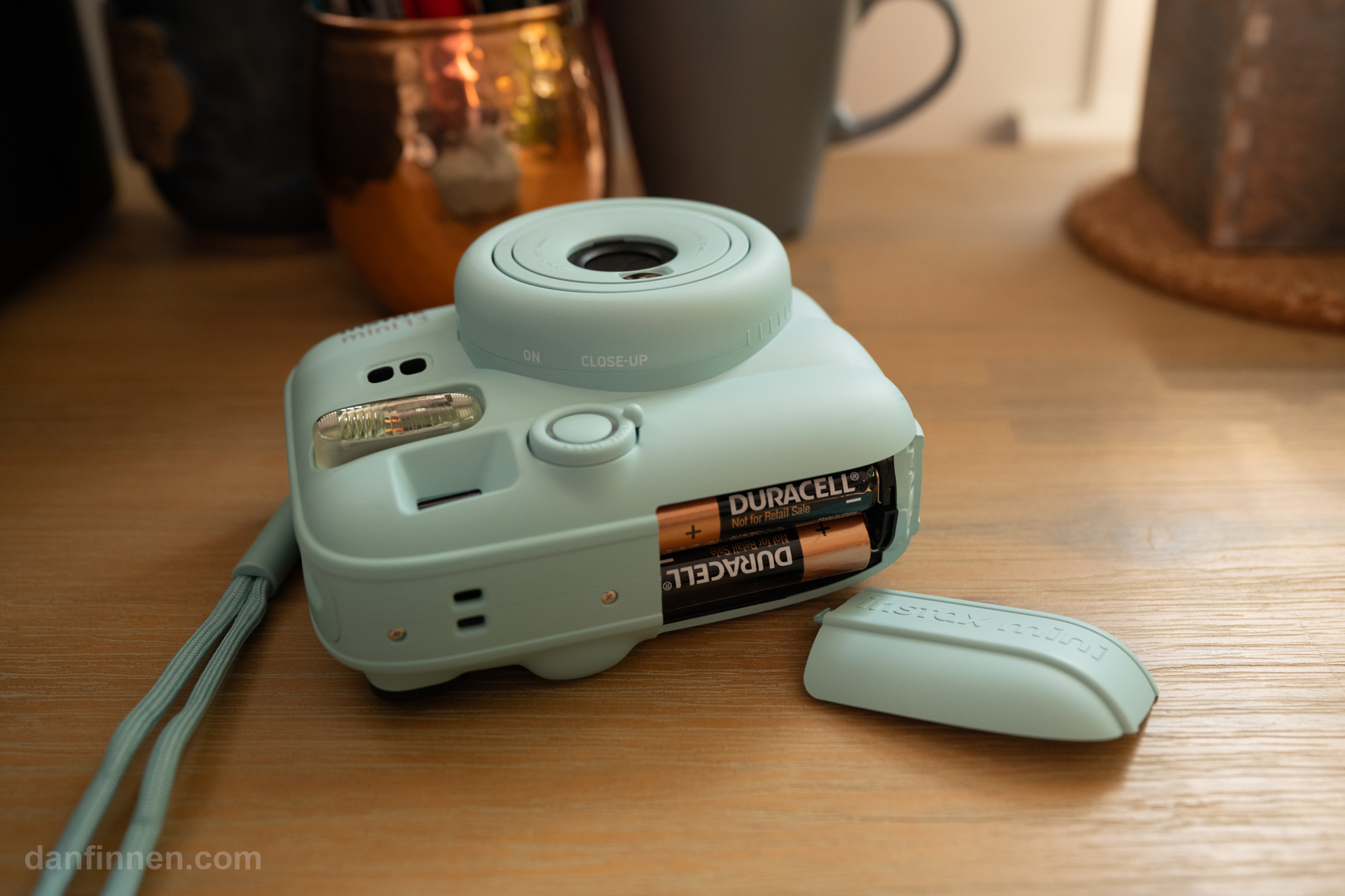
The Instax Mini 13 uses two AA batteries, which are included in the box and easy to find. I love this, as many of Fuji’s other cameras use much harder to find battery sizes that are inconvenient to replace.
However, be very careful not to leave alkaline batteries in your camera when you’re not shooting it. It’s not a matter of if alkalines will explode – it’s a matter of when. Alkalines need to be continuously discharged after they’re used once or they’ll leak chemicals that can ruin your camera.
Personally, I use Eneloop rechargable AA batteries (affiliate link here) in my film cameras. Not only does it reduce waste, but they can be left in a camera for months or even years with no adverse effects.
These cameras are very sensitive about needing fresh batteries, so if you’re having any trouble with your camera at all the very first thing you need to do is put fresh batteries in the camera. If the camera’s LEDs are flashing when you try to take a picture, that usually means it craves fresh batteries. If you’re planning on setting this camera out at a party or wedding, I recommend always changing the batteries right before the event even if they seem fine. You’re always better safe than sorry, and that flash is hungry for all the voltage it can get.

The Instax 99 has way more features than the 13, but not everybody needs them.
Recommendations
The Instax Mini 13 is an excellent camera, and one I can recommend to just about anyone without hesitation. However, if you’re looking for more control over your images and want to get creative with color effects, the Instax Mini 99 has way, way more features (though for a higher price).
If you really don’t like the appearance of the Instax Mini 13 (fair) but still want a simple camera that runs off AA batteries, the Instax 41 has you covered there. It’s essentially the same camera but looks different. I just made a complete guide for it!
If you’re a serious photographer looking to make high-resolution scans of your pictures to print, I recommend jumping formats to Instax Wide or Polaroid, both of which will give you way more image area to work with than the relatively tiny Instax Mini image. Personally, I love using vintage Polaroid 600 cameras like the Impulse AF and Polaroid SLR 680 for my work.
When it comes to parties, travel, weddings, or any kind of event where you want a keepsake, the Instax Mini 13 reigns supreme. If you can get an Instax Mini 12 for less money, I’d go for that while you can since it’s just as good for those who don’t care about the timer, but when you’re reading it those cameras may be discontinued.
I will have a complete guide on how to use the Instax Mini 13 up soon, but in the meantime don’t forget to pick up film for your camera and maybe even some Eneloop batteries. Also, I personally love the monochrome Instax Mini film, so if you like black and white, make sure to grab some of that as well. Using these affiliate links to buy your Instax Mini 13 camera costs you nothing and helps me keep this site online, so thank you for your support!
You must be logged in to post a comment.